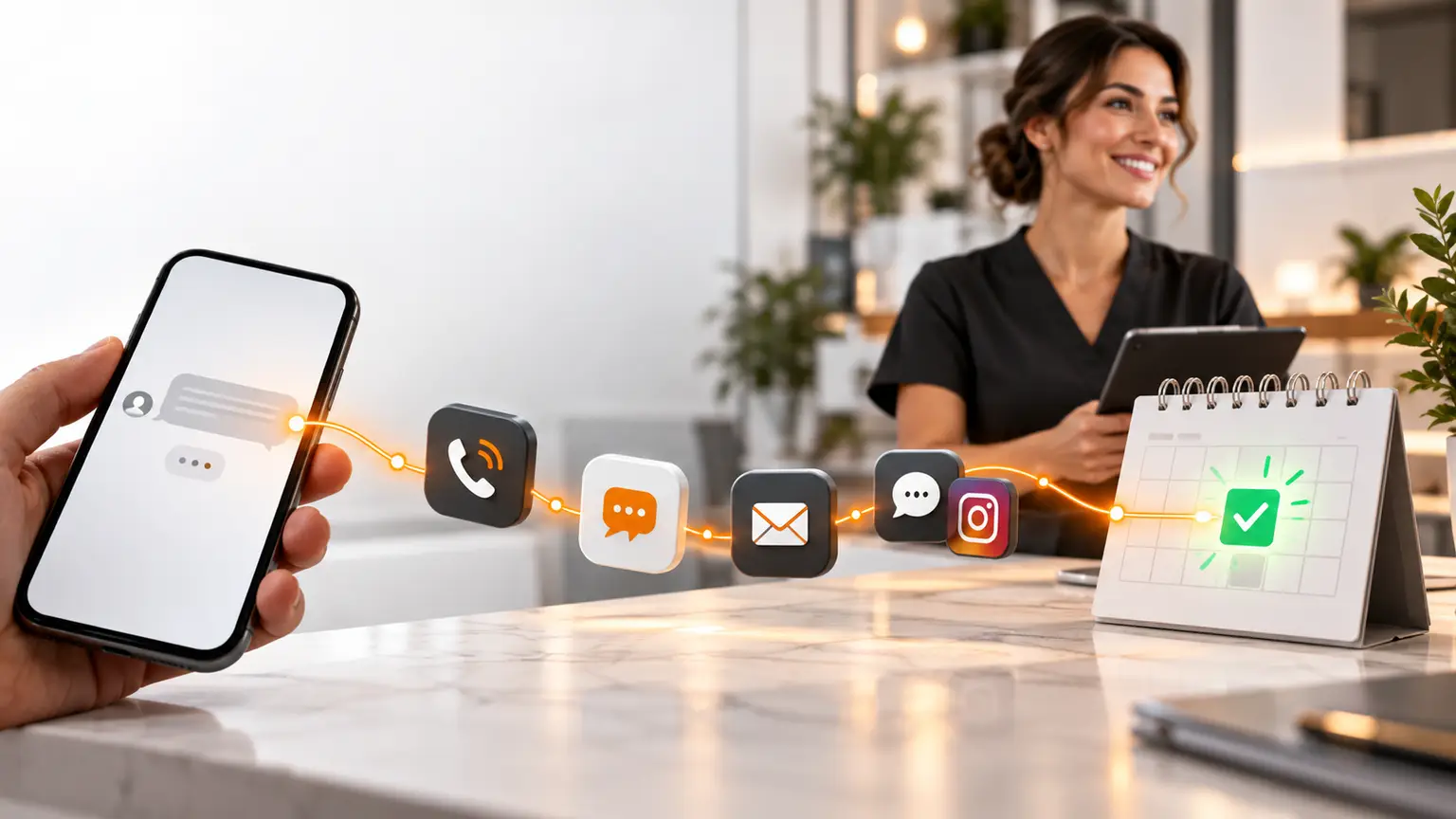
A missed service inquiry is rarely just a missed call. It is a homeowner who called three competitors after hours, a patient who gave up while waiting for a reply, or a shopper who left a question unanswered in a DM. The best service conversion examples start with a simple operating rule: every inquiry gets a useful response and a clear next step while intent is still high.
For businesses that sell appointments, estimates, consultations, reservations, or recurring services, conversion is not only a marketing number. It is an operational discipline. Speed matters. Context matters. And the response has to move beyond “someone will get back to you.”
What service conversion actually means
Service conversion is the moment an inquiry becomes a booked appointment, qualified opportunity, paid visit, or productive conversation with the right person. It can happen on a phone call, web chat, text message, email, WhatsApp, social DM, or at the front desk.
The mistake is treating every channel as a separate inbox. Customers do not think that way. They expect the business to recognize what they asked, answer their immediate question, and make it easy to act.
A fast reply alone will not fix a weak process. If the reply cannot check availability, collect the details needed for an estimate, update the CRM, or hand off a high-value lead with context, your team still has work waiting behind it. The strongest conversion process completes the routine work and brings people in for judgment, exceptions, and relationships.
10 service conversion examples worth copying
1. The after-hours plumbing call becomes a scheduled job
At 9:18 p.m., a homeowner calls about a leaking water heater. Voicemail captures the number, but it does not calm the customer or secure the work. An AI Receptionist answers within seconds, asks whether water is actively leaking, confirms the service area, explains the emergency response window, and books the earliest available technician.
The job details, urgency, address, and call summary land in the CRM and dispatch system. If the caller reports a safety risk, the conversation routes to the on-call manager immediately.
This works because the customer gets certainty at the moment they need it. It also protects the team from being pulled into every routine after-hours inquiry.
2. A dental website visitor books instead of browsing
A visitor lands on a dental practice website after searching for emergency care. They ask whether the office takes their insurance and has openings this week. A generic chat widget that says “Please call us” adds friction. A useful Appointment Agent verifies accepted plans, offers available time slots, collects contact details, and books the visit.
The front desk receives the appointment with the patient's reason for visit and insurance question already logged. They can focus on confirming clinical details, not chasing a half-completed lead.
For healthcare, the line matters. The AI Digital Employee can handle scheduling, common administrative questions, and routing. Clinical advice and sensitive situations should go to trained staff.
3. A Facebook DM turns into a real estate showing
A buyer comments on a listing at 8:40 p.m. and sends a DM asking whether it is still available. The Social Agent responds with current status, shares the relevant property details, asks whether they are pre-approved, and offers showing times.
If the buyer wants a Saturday appointment, it books the showing in the agent's calendar and creates or updates the lead record. The agent wakes up to a qualified prospect, not an unread message that has already gone cold.
The trade-off is tone. Real estate leads often want answers before they want a sales pitch. Ask enough to qualify, but do not turn the first conversation into an interrogation.
4. An auto service inquiry gets a firm estimate path
A driver texts a repair shop: “My check engine light came on. Can you look at it tomorrow?” The AI employee confirms the vehicle make, model, year, and symptoms. It explains that a diagnosis is needed before quoting a repair, offers open appointment times, and books the inspection.
That is a conversion because it sets the right expectation and gets the customer on the schedule. Promising a repair price without enough information may create a booking, but it can also create a bad experience at the counter.
5. An abandoned cart becomes a conversation, not a coupon blast
A customer adds a high-value product or service package to a cart, then leaves. An outbound follow-up message asks whether they had a question about fit, delivery, installation, financing, or availability. When the customer replies, the AI Sales Rep answers from approved product information and offers the next logical action.
For a fitness studio, that might be a trial class. For a home improvement company, it might be a design consultation. For a furniture retailer, it might be an inventory check and delivery estimate.
A discount can help, but it should not be the default. Many abandoned carts reflect unanswered questions, not price resistance.
6. An insurance quote request gets qualified before an agent calls
An insurance prospect fills out a form during lunch. Within moments, they receive a text asking a few relevant questions: coverage type, location, timing, current policy status, and preferred contact method. The system scores the opportunity and schedules qualified prospects directly with a licensed agent.
The agent receives the answers, source campaign, and scheduled time in the CRM. That makes the call more useful from the first minute.
Not every lead should follow the same path. A commercial account with multiple locations may deserve an immediate human handoff. A basic personal-lines quote request can often be gathered and scheduled automatically.
7. A hotel inquiry recovers a booking before the guest leaves
A guest calls to ask about pet policies, late check-in, and parking. The AI Receptionist answers the standard questions, checks the booking window, and sends a secure follow-up by text or email with the available room options.
If the guest is planning a group stay or asks for an exception, the conversation goes to the reservations team with the details intact. No one has to ask the guest to repeat dates, party size, or special needs.
Hospitality conversion often comes down to removing uncertainty. A quick, accurate answer can be more valuable than another promotion.
8. A legal intake call reaches the right person faster
A prospective client calls a law firm after a car accident. The intake flow confirms the practice area, gathers basic case facts, checks location and timeline, and identifies whether the matter fits the firm's criteria. A qualifying lead is routed to the appropriate intake specialist with a transcript and summary.
This is not about automating legal judgment. It is about responding quickly, collecting consistent intake information, and ensuring urgent matters do not sit in a voicemail queue.
9. A frustrated support request becomes a retained customer
A customer emails that their order arrived damaged. Instead of receiving a generic acknowledgment, they get a response that identifies the order, requests a photo if needed, explains replacement options, and opens a support ticket. If the customer is upset, the case moves to a human team member with the full thread and order history.
Service conversion is not always a new sale. Sometimes it is a customer who stays, buys again, and tells others they were treated fairly.
10. A multi-location franchise stops losing local leads
A home services franchise runs ads across several markets. Calls, web forms, and social messages reach different locations at different times. Without a shared process, lead response depends on who happens to be available.
A single AI persona can answer across channels, recognize the caller when they return, identify the nearest location, qualify the request, and book against the correct local calendar. Each location gets its own routing rules, while leadership gets a consistent process and cleaner reporting.
This is where one integration layer matters. When the conversation, calendar, CRM record, and follow-up all connect, the business stops paying for leads it cannot reliably serve.
Build the workflow around the next action
Start by reviewing the inquiries your team receives in a typical week. Find the ones that already have a predictable next step: booking an estimate, confirming service area, answering availability, collecting intake details, or routing a support issue. Those are usually the fastest wins.
Then define the handoff rules. What can be scheduled automatically? Which questions require a person? Who gets alerted for a high-value lead, a complaint, or an urgent request? Good automation makes these decisions visible. It does not hide them behind a black box.
Quincer AI Digital Employees can answer across phone, web, text, email, social, and messaging, then book calendars, update records, create tasks, and hand staff the full context in Slack or Teams. The goal is not to replace the team that knows your customers. It is to make sure that team spends its time where it changes the outcome.
Your next improvement may not require a new campaign. Pull ten recent missed calls, unanswered messages, or stalled inquiries. Ask what would have happened if each customer got an accurate answer and a booking option in seconds. That gap is often the most practical revenue opportunity in the business.